
Category: Life Skills

Nessie: Hand-Sewing Infant Toy

Enrichment means to improve something…in this case the “something” was basic sewing skills (and fine motor skills). This year I chose to do a hand-sewing enrichment activity that was an extension of the rattle lesson in the infant unit.  Students worked on their small motor skills while creating and hand-sewing an infant toy or rattle which was affectionately named Nessie.  Please note, this project could easily be adapted to machine sewing if you have sewing machines in your classroom.

Chicken Tender “Chopped” Challenge

What is it about cooking challenges that gets students so excited?  In my Career & Consumer Sciences class, my students always want to know if we are going to cook!  In order to prepare them for adulthood and living on their own, I do incorporate some survival cooking!  I try to teach them basic skills, preparing foods or meals that have a lot of versatility or options!  My students love chicken tenders and so this challenge was well received and gave them some different ways of preparing chicken tenders using the same four ingredients. Of course, you don’t have to limit this challenge to one specific class or age group as it would work well with junior high level students too because of it’s simplicity!

Activities for Teaching About Identity Theft

In today’s day and age where so much of what we need to do requires us to use personal information, it’s critical that we teach students about protecting themselves from identity theft.  In this post I will share some of the resources and activities I use with my students when teaching this topic. What I especially like about what I’m about to share is the project extension menu that allows students to have a choice in the way they choose to complete their final project.  Because of the personal choice option, students can choose according to their ability, their learning style and their knowledge of technology…and personally, I think I get better projects because I’m letting them decide!

Fruit Lesson & Galette Lab

Consumption of fruit in the daily diet is important for all age groups!  What’s to love about fruit?  A lot actually!  Fruit is available in many forms from fresh to frozen to canned and even dried.  Fruit is a nutrient dense, low calorie food that can be eaten alone as a snack or incorporated into a meal or dessert.  Fruits can be eaten raw or cooked and there are so many to choose from, some more seasonal than others!  This fruit lesson focuses on the classification of fruits, how to select quality fruits and explores enzymatic browning. It also features delicious galette labs.  Galettes are unique to most students and a little different than making pies, but they are easy to make and amazingly delicious especially with a scoop of vanilla ice cream on top!

Escape the Pay Check Conundrum

Back again with another breakout style review activity!  This time the escape or breakout centers around pay check deductions and math calculations.  Created because, honestly, even though teaching about pay checks is important, it can be boring!  This review jazzes things up because student teams are competing against each other as well as the clock to get to the prize box!  In the process, they are honing their math skills.  Win-win for those of us who need to incorporate core concepts into our curriculum!  The beauty of this breakout is that it can be done both with locks and boxes if you have them or digitally if your don’t!

Children & Self-Esteem

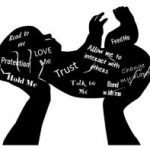
Teaching students about self-esteem is important at any age, but it’s super important to emphasize how critical it is to a child’s development. In this lesson I share some ideas and activities that help students understand what self-esteem is, the difference between positive and negative self-esteem, how it’s developed, why it’s important and who/what helps to influence it. So, read on to learn more about this lesson!

A Twisted Love Poem Activities & Updated “No One Would Tell” Resources

Ever feel like you need to breathe new life into some of your units?  That’s just how I felt with some of my dating violence activities! Not that they still weren’t great activities, I was just getting tired of using them and needed something fresher. In this post you will find a few of the new activities and resources that I created that involve a poem, a teen girl visual and an updated movie for use in this unit. So, choose one, two or all three to try out the next time you teach about dating violence!

Plant Based Proteins Part I: Beans & Legumes

I am a big fan of Michael Pollan’s work!  I especially like what he has to say about food in his documentary “In Defense of Food”.  Even if I don’t have time to show my students the documentary in its entirety, I do like to focus on certain parts of it.  One in particular are his 7 words that he uses to sum up healthy eating: “Eat foods–Not Too Much–Mostly Plants”.  It’s a great way to introduce students to different plant based foods!  Read on to learn more about how those 7 words equate to a lesson about beans and legumes.

Maslow’s Hierarchy of Needs: An Interactive Lesson

Maslow’s Hierarchy of Needs is one of those theories that is so versatile that it can be taught in a variety of ways and in a variety of classes. I know personally I’ve taught it in my child development course revolving around an infants needs and in housing lessons regarding how homes meet our needs. I also teach this concept in my Individual & Family Studies course when talking about what drives our behaviors, goals and even our decisions.  The interactive lesson that ensues is the one I use in that class. It was set up to also include some reading and writing strategies and techniques because, in our school, we all have to help reinforce these concepts so that our school scores improve. However, I did also include some “hands-on” activity with play-doh as well as some technology because…it’s always fun to mix those two mediums together!  Have fun and see if your students enjoy learning about Maslow’s Hierarchy of Needs!

Ageism Lesson Plan

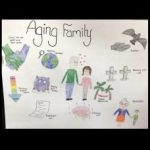
Aging is an event that happens to all of us, whether we like it or not! Students are often uncomfortable talking about aging because they fear it and, not only do they want to avoid it, they often think it won’t happen to them. They often view aging only from the physical perspective…little do they realize that it’s already happening to them in other ways. This lesson encourages students to view aging biases that are out there, including some they might hold and others that may have been directed at them! It doesn’t take long for students to see the similarities between the young and the old!