Tag: Jr. High

Embroidered Tea Bag Bookmark: A Hand Sewing Project

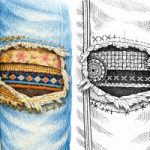
As I’m casually looking at social media, I often see requests for quick, easy and inexpensive sewing projects. The Embroidered Tea Bag Bookmark: A Hand Sewing Project is perfect for all grade levels, experience levels and a great way to use up those odds and ends of scrap fabrics. It can also be done in a couple of class periods, allows for personal creativity and develops fine motor skills. A win, win, win all the way around!

60-30-10 Color Rule & Nursery Design Project

If you teach an interior design class, you have an instant in for including lessons on color theory and design. However, you don’t have to teach an interior design class to be able to incorporate color theory! The 60-30-10 Color Rule & Nursery Design Project can easily be used in a class where preparing to become parents and planning a nursery are taught. It can definitely be included when teaching about the family life cycle stages as well. Figure out how or where you can include this topic and read on for more details.

Recipe One Pagers

You may be familiar with using one pagers as a way for students to concisely summarize key takeaways from readings or videos. However, Recipe One Pagers can also be used in a food class. I had so much fun collaborating with Lindsey Harlan from Arkansas to share some “punny” ideas with you in ready to use recipe one pagers. Read on to learn more!

Candy Salad Family Project

You may be familiar with the candy salad trend seen in Tik Tok and Instagram videos. While the educational value of blending various candies is debatable, there is a way to make the concept more educational. In this Candy Salad Family Project, students brainstorm a variety of candy types and then make connections to the personality descriptions of family members before creating their own family candy salad.

Shrinkflation

For years products have been decreasing in size, but not in price! This is known as Shrinkflation and in this lesson, students will learn what the concept means as well as how to calculate the percentage change in product sizes and then how consumers can fight back. This is a great lesson for a consumerism class, a financial literacy class or even a foods class!

Food Safety Myths & Facts

It’s been my experience that many students, especially junior high, don’t know food safety concepts let alone practice them! The practices they believe to be safe are far from it and often very inaccurate. So, with all of the misinformation out there, it’s important for students to know what’s true versus what is false. With this Food Safety Myths & Facts activity, students learn the difference in a very engaging way. Read on to learn how this activity works.

Math in the Kitchen

Many students hate math and don’t see the relevance in the real world! If you can relate, you know that students will grumble, complain and resist doing math at every turn, especially when a fraction is involved. Math in the Kitchen was created based on a book I read where one of the main characters, who loved to cook, struggled with math. Her friend took a recipe and changed the wording to include math problems where basic multiplication, division and fractions were used to decode the actual ingredient amounts. I thought this was a clever way to have students practice math and see the real world connection in cooking and baking, so I created a few. Read on to check them out!

Resiliency & The Family

Challenging situations in life escape no one, especially the family! Resiliency & The Family will provide you with ready to teach lesson plans that define many aspects of resiliency, explore associated risk and protective factors along with related characteristics in a variety of engaging ways.

AI Companions: Lessons & Activities

AI Companions is a new phenomenon that is rising at a growing rate. Is this phenomenon just a fad that will be here today and gone tomorrow? Or, is this an alarming trend that is here to stay? Either way, should we be concerned? In this AI Companions: Lesson & Activities, students explore the concept using the provided prompts before deciding if it is a good idea or a bad idea and completing follow-up activities.