Recently, I came upon the concept of Pocket Story Aprons and thought they would be a great addition as a project in Child Development. The goal of pocket story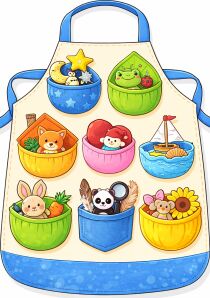 aprons is to help promote storytelling, creativity and imagination when working with young children. Continue reading to learn more about what these are, the benefits to a child’s development and how to create one.
Set
- Ask students if they are familiar with pocket story aprons. Ask them to describe or explain what they think they are and how they might be used.
- Show students the Pocket Story Aprons Slidedeck to learn more about them and their benefits.
- Have students practice impromtu storytelling using an object selected from a mystery bag. Students will have a couple of minutes to create a fun, imaginative story around the object they pulled.
Materials
- iPad or Laptop
- Projector & Screen
- Props for Mystery Bag
- Aprons (affiliate link)
- Felt Squares or Fabric Scraps
- Fabric Glue (affiliate link) or Needles & Embroidery Floss
- Sewing Machines & Thread (optional)
- Fabric Scissors
Directions
- Go over the Pocket Story Apron project via the planning guide and rubric.
- Give students an opportunity to develop their ideas for pocket sizes, shapes, layout and objects to be used throughout their story.
- Once they have a plan, then you can give them the actual apron base and have them start placing their pockets.
- You will need to decide ahead of time how you will have them attach their pockets to the apron. They can be glued in place with fabric glue. They can be hand stitched in place with needles and embroidery floss. Or, they can be machine stitched in place if you have access to sewing machines and/or your students have experience using them.
- After students have stitched their pockets in place and have all of their props and storyline, they need to practice running through it and being interactive with them.
- Students will present their pocket apron stories with the class before eventually presenting them to a younger group of students such as a preschool class, a day care center, a library program or even a kindergarten class.
Attachments
- Pocket Story Aprons Slidedeck (PDF)
- Impromtu Objects for Mystery Bag (PDF)
- Pocket Story Aprons Planning Guide & Rubric (PDF)
