Admittedly, creating this new food guide pyramid has been challenging! I can see why there have been many requests for updated lessons and activities around it.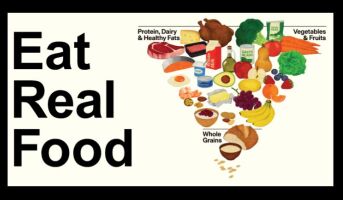 So here goes…In this Real Food Guide Pyramid Lesson & Activities, you will find engaging hands-on activities to use with students to check their pre-existing knowledge on the new guide, learn background info about it and the food it encourages, followed by a culminating group assignment. Give it a try and let me know what you think!
Set
- Teacher Note: You will need to create large blank PYRAMID outlines on construction paper or posterboard prior to this activity. You will need one for each group you have.
- Without references, phones, iPads or Laptops, etc, student groups will build the new food pyramid for 26-30 foods sight unseen. Foods to include can be found below.
- Place students into groups of 4-6 and give each group a LARGE blank triangle/pyramid and a set of foods. The foods can be the actual food model foods or they can be sticky notes of listed foods (words but no image) or other food pictures you may have. Groups look at all the foods and decide the placement of each based on how often individuals should consume them. Students will need to share and justify their food placements and final layout.
- When finished, students are to walk from group to group, viewing and listening to each created version. At this point, take a picture of each group’s pyramid to use as a before and after image.
- Now, show students the actual new real food pyramid and have them do a compare/contrast type of analysis between the actual and their own.
- Share and discuss their analyses and work in the following questions:
- What similarities did you notice between your version and the actual version?
- What differences did you notice between your version and the actual version?
- What surprised you the most?
- If you had to redo your pyramid to replicate the new pyramid, approximately how many “food moves” would you have to make?
- Questions you have?
- Explain that this pyramid is very different from any that we’ve ever known. If you’ve been around awhile, like me, there have been many over the years. This is the first one that has an inverted pyramid. Let’s learn more about what this food guide pyramid is all about.
Materials
- iPad or Laptop (teacher use)
- Projector & Screen
- Posters of Real Food Guide Pyramid
- Food Models (optional)
- Sticky Notes (optional)
- Copy Paper in 3 Colors for Chains
- Glue or Staplers
- Color Markers for Chains
Activities
- To see what students know about the former and current food guides, have them complete the Food Guide Prediction assignment. Students read each statement and decide if it is representing the OLD (former MyPlate food guide) or the NEW (current Real Food Guide Pyramid). Encourage them to make their best guess if they truly do not know. Teacher Note: As always, if you need the key, just email me (kim@familyconsumersciences.com) and I’ll send it your way.
- Once students have made their predictions, it’s time to reveal the actual answers. This can be done in a couple of different ways.
- Option #1: First, show the individual category “groups” using the slidedeck, going over each one individually and adding explanations if needed.
- Option #2: Print out the category “group” cards/slides and lay them out around the room. Students circulate and read each card to determine if their predictions are correct or not. Regroup as a class and go over final answers referring to the slidedeck and adding explanations if needed.
- For more information about making food selections from the new guide, view the YouTube video titled, “New Food Pyramid Guidelines”. Answer the prompts as you view. Go over the answers as a class or collect and grade….your call.
- Introduce the culminating activity by having students answer this prompt: If a student were to drink energy drinks and eat doughnuts every single day, what might his/her health be like down the road? Share predictions. Answers may include: cavities, heart disease, diabetes, overweight, poor skin/hair
- Now, assign the Paper Chain Challenge. In this assignment, student groups will visually demonstrate how food habits compound into long-term results. Teacher Note: When you print off the links for students to use and sort, be sure to print page 1 in one color, page 2 in a second color and page 3 in a third. Each color represents the repeated order of the chain links. Students will need to cut all of the links out as they make their connections. Provide colored markers for them to write on the blank strips and either glue sticks, bottles of glue or staplers for attaching the chains.
- Divide your students into groups of 4-6. Go over the guide sheet to the assignment to make sure students understand that they will be creating two sets of paper chains; one representing healthy eating habits and the other representing unhealthy eating habits. Each chain includes a repeating progression of food choices, effects of those choices and a health outcome created by students.
- When students are finished, go over each of their chains discussing their connections and outcomes. Add further explanation if necessary or clarify if their health outcomes do not match their food choice and body effect. These can be hung around the classroom as a garland if so desired. Note: As always, if you need the key, simply email me (kim@familyconsumersciences.com) and I will send it your way.
- Finally, students complete the Exit Slip to wrap up the lesson.
Attachments
- Intro Activity Pictures & Food List (PDF)
- Food Guide Predictions (PDF)
- The Real Food Guide Slidedeck (PDF)
- New Food Guide Pyramid Video Guide Sheet (PDF)
- Paper Chains Challenge (PDF)
- Exit Slip (PDF)
Additional New Food Guide Resources
