Ever “wing” a recipe and wonder why it didn’t turn out correctly? I’m sure many of your students have! In this hands-on, no tech activity, students learn why reading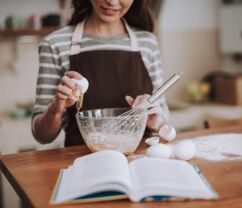 a recipe carefully matters. So, if you’re looking for a way to help students understand the importance of following directions in food labs, check out my Cookie Catastrophe: Why Reading a Recipe Matters!
Set
- Begin by asking students to honestly respond to the following: Raise your hand if you’ve ever skipped a step in a recipe, ignored directions, or improvised? Today we’re going to explore why reading a recipe actually matters.
- Give students a visual of a plate of cookies. You can leave the visual as is or you can have your students color, cut and/or glue it to a paper plate (the cheap, flimsy kind).
Materials
- Paper Plates (optional)
- Crayons (optional)
- Scissors & Glue (optional)
- Tape
- Post-It-Notes
Directions
- Inform students that as they “prepare” their cookies, they will experience a variety of “mistakes”. Each “mistake” will require them to tear off a piece or section of their cookie visual.
- Cut apart the mistake slips and dole them out randomly, one per student, or you can draw the slips and share with your students. Either way, as the mistake is read, students will tear off a piece of their plate of cookies as directed.
- After all of the “mistakes” are read, students will attempt to fix their mistakes by taping the ripped pieces back together. As students are working to put their cookies back together, ask them the following:
- Are you able to “fix” the cookies flawlessly? Why or why not?
- What happened to your cookies as you made mistakes? After you taped it back together, what did you notice?
- How would you feel about serving these to guests? Why or why not?
- List at least five connections you can make about this repaired plate of cookies and this activity in regard to the importance of reading a recipe. Be prepared to share with the class.
- Teachers–there are many connections that can be made from the aesthetics of the cookies, to taste, texture, safety, yield, baking process, use of wrong ingredients, wasting ingredients, not looking at all like the picture or intended product, not to mention the frustration and/or stress associated with the time and effort put into it for the end result to be unusable/unservable.
- If you are using this as a review for an advanced culinary class, you may wish to go through each mistake and discuss the actual consquences of it to the overall cookie dough and prepared cookies.
- KEY TAKEAWAY for this activity is: Not all mistakes in cooking and baking can be undone! So read your recipes carefully!
- If you want students to complete an exit slip, give them a post-it-note and have them add their name and answers to this prompt: Name three pieces of advice you’d give to someone just starting out about reading a recipe. Collect them at the end of the period.
- Optional: Create a bulletin board around the importance of reading a recipe and hang the cookie plate visuals up to illustrate.
Attachments
