This Avant Garde Fashion lesson, has students actively exploring how creativity, bold ideas, and unexpected choices can shape expressive design! It provides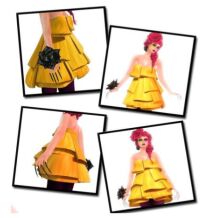 some background information focusing on what it is, how it came to be, some designer examples and why it matters. Afterwards, students are provided with a hands-on designing challenge presented in a runway show that shares their experimentation and creative thinking with the class.
Set
- Introduce the concept of creativity, bold ideas and happy mistakes via this Paper Plate Illustration activity. Be sure to refrain from saying anything about avant garde fashion.
- Give each student a paper plate and a marker. Have students place the paper plate on their head. Ask students to draw on their paper plates on top of their heads without looking as per your instruction.
- After the six steps have been given, let everyone look at their plates. Have students count up the number of points they received by following the scoring guide within the instructions.
- Discuss the points earned and deem someone a winner! Ask students to answer the following prompts in regard to what they just drew.
- What surprised you most about how your drawing turned out?
- Did any “mistakes” make your outfit look more interesting or unique? How?
- What part of your drawing looks the most bold, dramatic, or unusual?
- How does your drawing differ from the everyday clothing people typically wear?
- Could something this unusual or unexpected be considered stylish or cool? Why/why not?
- As you look at your paper plate design, realize…
- You just created an outfit that was bold, unexpected, and imaginative.
- Some of your ‘mistakes’ actually may have made your designs more interesting.
- Fashion designers sometimes do this on purpose — they break rules and try wild ideas.
- There’s a name for this kind of creative, unusual fashion… and that’s what we’re going to explore….AVANT GARDE and that today’s silly drawings mirror how avant garde designers experiment with boldness.
Materials Needed
- iPad or Laptop
- Projector & Screen
- Paper Plates (that can be written on)
- Markers & Highlighters
- Tons of Newspapers or Tissue Paper
- Tape (clear, masking, painters, etc.)
- Paper Scissors
- Yarn, String, Wire, Cardboard (optional)
Activities
- To give students some background information about this style of fashion, show students the Avant Garde Presentation. Have students fill in the notes form as you you go through the presentation.
- Discuss some or all of the prompts as a class afterwards. Many are opinion based so it might be interesting to hear their responses.
- So reinforce what is and is not considered avant garde, assign students the Avant Garde Fashion or NOT MAZE to complete with a highlighter. Remind them that the goal is to move ahead in the maze. If they go back to any question that they’ve previously completed, then they will need to revisit the prompt and their answer. Once they reach the end, you can have them turn it in for a quick grade or you can go over it as a class…your call.
- Now that students have a better idea of what this fashion style is, it’s time to assign them the Avant Garde Newspaper or Tissue Paper Fashion Project. You will need to decide ahead of time if you will assign newspaper or tissue paper or allow students to use either or both.
- Divide students into small groups, go over the guidesheet and then allow some time for them to plan and get their ideas down on paper before construction.
- Students will actually construct their garment according to the mediums provided and the criteria. Students will need to choose a member of their group to be the model for this design and walk the runway during the presentation.
- On the day of presentations, students will present their garment/design and read the description of it as their model walks down the runway.
- Using the rubric, you can actually grade these as they are being presented. If you want students to vote on their favorite, you could certainly add a poll to this part of the lesson.
- To culminate, have students complete the 3-2-1 Exit Reflection. Again, these can be shared as a class or you can read each one and decide how much you will share about the experience and lesson the following class period.
Attachments
- Fashion Illustration: Paper Plate Drawing (PDF)
- Avant Garde Fashion Presentation (PDF)
- Avant Garde Fashion Presentation Notes Form (PDF)
- Avant Garde Fashion or NOT Maze (PDF)
- Avant Garde Newspaper or Tissue Paper Project/Planning Guide (PDF)
- 3-2-1 Avant Garde Reflection (PDF)
