Category: Nutrition

Fat, Sugar & Salt Oh My!

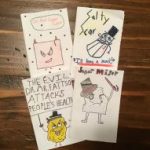
The dietary guidelines recommend that we limit these three bad boys: fat, sugar and salt (oh my!) in our diet to reduce our risk of serious health effects. Sometimes this is easier said than done with teens! In order to make this more interesting and palatable for my students, I’ve turned it into a mini comic book project. That is, of course, after they’ve initially learned a little about these dietary villains!

Reading a New Food Label

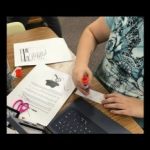
Reading and deciphering a food label is like learning a foreign language to many students! Some get it quickly and easily, some don’t and require more practice! Reading a new food label is an interactive lesson that has students cutting, pasting, and annotating various pieces of label information before learning how to decipher the numbers to determine its healthfulness. Once students understand the concept, their label reading skills can be reinforced by practicing on empty food containers!

A Glo-Bowl Affair

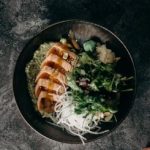
Sharing another Struggle Meal lesson that I presented at the Missouri FACS conference last summer! This lesson titled, A Glo-Bowl Affair, is a fun, engaging lesson that was inspired by both Frankie Celenza’s Struggle Meal Grain Bowl episode and by activities suggested in the EduProtocol Field Guide (amazon affiliate). I hope your students find this lesson and all of its activities as enjoyable as mine did!

Whole Grains

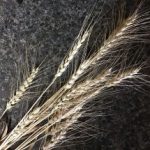
When teaching about whole grains, I like to cover the following six categories: wheat, oats, rye, rice, corn and barley. I do this as an overview because it’s a great way to introduce and expose students to a variety of whole grains that can be incorporated into different meals. After all, 100% whole grains are part of a healthy, nutritious diet!

Convenience Foods & A Can Do Struggle Meal Challenge

“Convenience Foods & A Can Do Struggle Meal Challenge” was another lesson I shared with Missouri FACS teachers during their July conference. This challenge was a big hit with my students! As a teacher, I love to see my students in full collaboration mode as they create, plan and execute their ideas!

Let’s Get Stacked: Pancake Wars

In July I had the privilege of presenting at Missouri’s State FACS Conference! For one of the presentations, I shared a series of lessons created around themes found in the Struggle Meal video series hosted by Frankie Celenza. “Let’s Get Stacked: Pancake Wars” is just one of the interactive lessons and lab that I created using this free, short, upbeat video series. Periodically, I will be sharing more lessons based on this series, but for now, check out how to teach and prepare savory pancakes in a very unique way!

Starter Pack Meme Ideas

My son recently introduced me to “starter pack memes” which I had to look up! He had to create one for a college “get to know you” activity and once I knew what it was, I thought it would make a great, fun and interactive activity. So, below you will find my starter pack meme ideas for topics that can be used in a variety of different content areas along with instructions for creating.

Fruit Lesson & Galette Lab

Consumption of fruit in the daily diet is important for all age groups!  What’s to love about fruit?  A lot actually!  Fruit is available in many forms from fresh to frozen to canned and even dried.  Fruit is a nutrient dense, low calorie food that can be eaten alone as a snack or incorporated into a meal or dessert.  Fruits can be eaten raw or cooked and there are so many to choose from, some more seasonal than others!  This fruit lesson focuses on the classification of fruits, how to select quality fruits and explores enzymatic browning. It also features delicious galette labs.  Galettes are unique to most students and a little different than making pies, but they are easy to make and amazingly delicious especially with a scoop of vanilla ice cream on top!

Plant Based Proteins Part II: Seeds

If you visited the site last week, you saw that the plant based protein lesson was focused on beans and legumes. This week is a continuation of plant based proteins, concentrating on seeds!

Plant Based Proteins Part I: Beans & Legumes

I am a big fan of Michael Pollan’s work!  I especially like what he has to say about food in his documentary “In Defense of Food”.  Even if I don’t have time to show my students the documentary in its entirety, I do like to focus on certain parts of it.  One in particular are his 7 words that he uses to sum up healthy eating: “Eat foods–Not Too Much–Mostly Plants”.  It’s a great way to introduce students to different plant based foods!  Read on to learn more about how those 7 words equate to a lesson about beans and legumes.