
I’ve been seeing alot of requests for introducing students to color theory in conjunction with interior design, especially for junior high students. After giving this a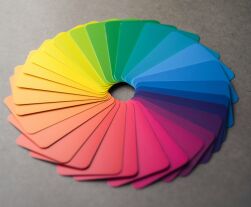 great deal of thought, I created this Color Me Schemes mini-lesson with hands on activities to help newbies to interior design or color theory understand this concept.
Set
- Give students a white board and dry erase marker or a piece of scrap paper or post-it note. Ask students to answer the following prompts: #1: Who invented the color wheel? #2: When was the color wheel invented? #3: Why was the color wheel invented? The answers can be found in the link web-resource found in the next bullet.
- Print the slide deck sections of the web article “A Beginners Guide to Color Theory” and place them around the room along with the colored crayons that coordinate with the color concept. I always had the big classpack box of crayons in my classroom, but your art teacher may already have this and let you borrow it.
- Students will move from one section to the other to take notes using the Color Theory Notes Worksheet. Students will color in the boxes according to the information at the station. The rotation order doesn’t really matter as long as the notes are completely filled in at the end.
Materials
- White Boards with Dry Erase Markers (optional)
- Post-It-Notes
- Crayola Crayon Classpack (affiliate link)
- Bedroom Templates
Activities
- Now it’s time for students to apply what they’ve learned! Copy enough Color Me Cards for your class size and selection variety. Cut them apart and shuffle before having each student randomly select a “Color Me Card”. The card will be the basis for how they must color in their bedroom template so you may want them to keep it a secret. Once students have their card, they must plan their color palette and briefly explain how the colors work with the term on their card. For example, if a student gets a Color Me Card that has the term Complimentary Colors on it, they may decide to use “blue and orange” and the explanation would be that these two colors are opposites on the color wheel. Students can write their name, the color scheme and this information on a post-it-note and submit it to you for approval.
- Once the palettes have been planned, and approved by you, students can choose a template and begin coloring it in with their planned palette.
- When students have finished coloring their template, have them write their name on the back side of the template along with their post-it-note and turn it in.
- You will take their templates and randomly number them. Be sure to create a code/key for yourself for easy grading as they apply to the color categories.
- Set these up around the room like a gallery walk and give students an answer form to complete as they circulate the room. Their goal is to identify each template by the color scheme it represents using the provided word bank. It’s up to you as to whether you let them use their notes or not. Note: If you are using this activity with more than one class, swap the templates by class so students can’t ask their neighbors if the template was theirs. If you don’t have that option, then stagger students throughout the gallery walk and rotate after so much time so they can’t talk to each other. Be sure to remove the post-it-notes from the backs.
- Collect the answer sheets and grade according to the key you created based on the numbers you assigned each template.
- After the forms have been graded, go over the correct answers. This might be a good time to ask students which color scheme(s) were the easiest to identify and which were the most difficult and why.
- Optional: Take their complete bedroom templates and create a bulletin board or wall display of the various color theory concepts for everyone to see!
Attachments
- Color Theory Station Cards
- Color Theory Notes Worksheet (PDF)
- Color Me Cards
- Bedroom Templates
- Color Theory Quiz Form
Photo by Andy Brown on Unsplash
